Showing posts with label herb. Show all posts

Tuesday, May 21, 2013

Sugarcane (Saccharum officinarum)

Scientific Name: Saccharum officinarum
Common Names: Sugarcane, sugar cane
Other Species: S. arundinaceum, S. barberi, S. bengalense (AKA - S. munja), S. edule, S. procerum, S. ravennae, S. robustum, S. sinense, S. spontaneum

Description

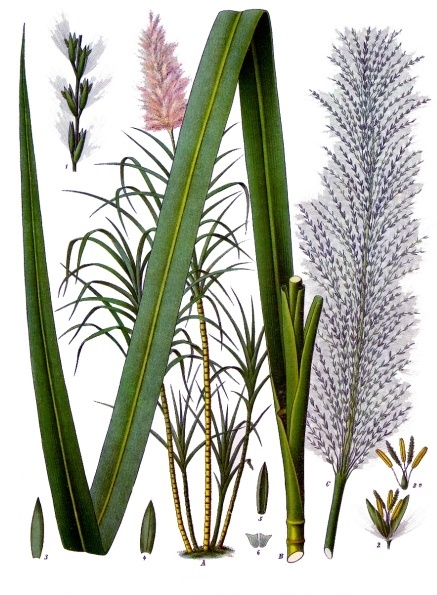
Sugarcane is a tropical grass native to southeast Asia that can grow from 4-5 meters tall. It belongs to the Poaceae ("true grasses") family and, like bamboo, it has hard, jointed stalks (canes), and long, strap-like leaves with parallel veins. Its many, small wind-pollinated flowers grow in a large, feathery tuft on a single reed high above the leaves.

When harvesting sugarcane, only the stalk is cut, but the roots are left intact so that the stalk can grow back to be re-harvested for several years before they become too old to produce enough sugar and have to be replaced by new plants.

Chemistry and Processing

The cane (stem) of the sugarcane plant is harvested and its juice is processed to make crystals of brown sugar and white refined table sugar.

To make white granulated sugar (sucrose), the stalks are shredded up and their juice (which contains raw sugar) is squeezed out, treated with Ca(OH)2 (calcium hydroxide or "hydrated lime") and bubbled carbon dioxide, and then filtered to remove impurities (such as fibers and soil). This "clarified" filtered liquid is then evaporated to make it thicker before it is sent to a boiler. "Seed crystals" of sugar are added to the boiling liquid to encourage the already-present sugar crystals to grow. This liquid becomes what is called the "mother liquor," a solution that contains molasses and sugar crystals, which is then centrifuged (spun very fast, similar to a washing machine's spin cycle) to separate the molasses from the raw sugar. Once the molasses is removed, the remaining liquid is dried so that only the raw sugar crystals remain. Since there is still a brown coating of molasses on the white sugar crystals, this has to be removed by melting the raw sugar and washing this syrup by running it through a filter, the sugar is then clarified further and "decolored" with H3PO4 (phosphoric acid) and Ca(OH)2 (calcium hydroxide) or CaO (calcium oxide). Lastly, this solution is boiled again until the pure white sugar crystals are concentrated. The white crystals are then dried in a granulator and then driven through a series of screens to break up the large crystals into smaller crystals. These small, even-sized granulated crystals are the final product: white table sugar!

Other products that come from sugar cane, other than brown and white cane sugar, are: molasses, cane syrup, and wax. Sugarcane juice can also be fermented to make liquors, such as rum. 

Culinary Uses

Sugar from sugar cane is used to sweeten pretty much anything from tea, to candies and desserts, to medicines. It is also used to preserve fruits and meats, to caramelize and glaze meats and vegetables, and is found in many condiments, including: barbecue sauce, ketchup, and salad dressings.

Pictures

 S. officinarum being harvested.

 S. officinarum in flower.


Cut canes (stems) from sugarcane plant.

 Here is a diagram of how cane sugar is refined (from: The Canadian Sugar Institute).

LINKS FOR MORE INFORMATION:

KEW Royal Botanic Gardens

PLANTS Profile

Purdue University: Center for New Crops and Plant Products

Sugar.Org: How We Get Sugar

Canadian Sugar Institute: Sugar from Field to Table


Cinnamon (Cinnamomum verum)


Scientific name: Cinnamomum verum
Common Names: True Cinnamon, Sri Lanka Cinnamon, Ceylon Cinnamon
Other Species of Cinnamon: C. cassia (Cassia or Chinese cinnamon), C. burmannii (Korintje, Padang cassia, or Indonesian cinnamon), C. loureiroi (Saigon cinnamon, Vietnamese cassia, or Vietnamese cinnamon)

Description

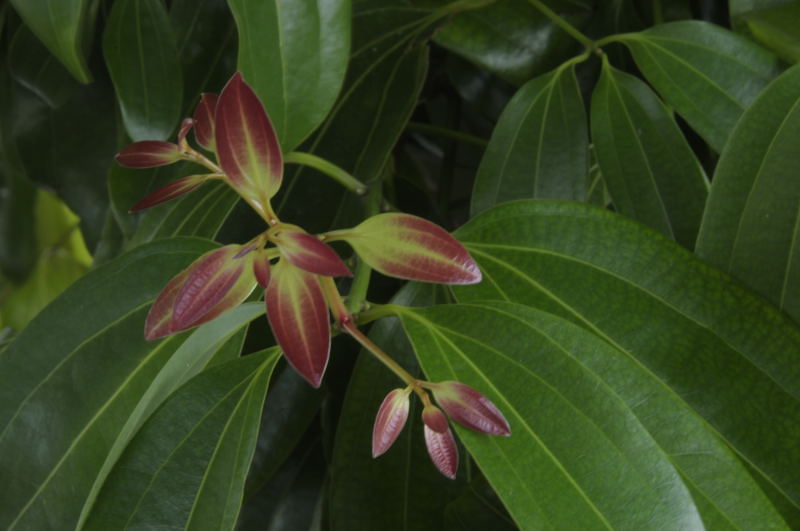
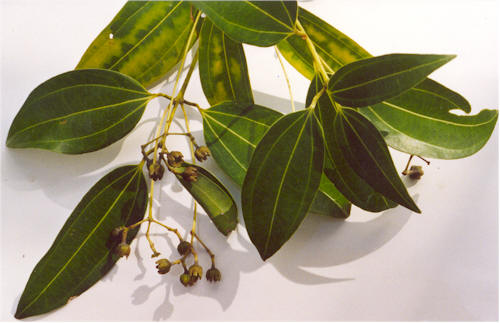
Cinnamon is a small evergreen tree native to Sri Lanka, belonging to the laurel family (Lauraceae), that can grow to a height of 10-15 meters tall. It has ovate, opposite leaves (7–18 cm long), and its small green flowers are borne on many-branched structures called panicles.

Chemistry and Medicinal Properties

Cinnamon essential oil has antimicrobial and anti-inflammatory properties. Cinnamic aldehyde or cinnamaldehyde (65-80% of cinnamon essential oil) is a yellowish liquid that gives cinnamon its characteristic scent and flavor. Other components of cinnamon essential oil are: eugenol, trans-cinnamic acid, hydroxycinnamaldehyde, o-methoxycinnamaldehyde, cinnamyl alcohol and its acetate, limonene, alpha-terpineol, tannins, mucilage, oligomeric procyanidins, and trace amounts of coumarin.

C. cassia differs from C. verum in its eugenol and coumarin content. Coumarin, a substance found only in the cassia species of cinnamon (at 0.45%), is a precursor to coumadin, an anticoagulant. Coumarin can cause kidney and liver damage in mice and rats, and possibly humans if consumed in large amounts.

Cinnamon leaf oil has been found effective at killing mosquito larvae (see: "Cinnamon Oil Kills Mosquitoes" in the links at the bottom of this page).

Research has shown that chewing Big Red chewing gum (which contains cinnamic aldehyde) can kill up to 40% of the bacteria that causes bad breath (see: "Popular Chewing Gum Eliminates Bacteria That Cause Bad Breath" in the links at the bottom of this page).

There is conflicting research relating to cinnamon's ability to help control type 2 diabetes, and so far the data is inconclusive.

Culinary Uses

The inner bark of the cinnamon tree is used to make the spice cinnamon. This bark is harvested 2-3 years after the tree is planted, it is then dried and rolled up to form sticks (called "quills") or ground into a powder. Cinnamon is slightly bitter and has a hot spicy aromatic flavor and scent. It is used in many recipes as a flavoring and condiment, especially in desserts and spicy drinks (such as apple cider and hot cocoa). It can be used to spice up fruits, breads, candies, curries, and cereals, among other things. In Mexico, cinnamon is a common ingredient in chocolate. Most spice marketed in the U.S. as cinnamon is from C.cassia, rather than true cinnamon (C.verum). Cassia has a more bitter taste than true cinnamon (which has a slightly sweet flavor) and its quills of bark have two curls, while C.verum curls into a single spiral.  

Pictures 

Leaves and flowers of true cinnamon (C. verum)

The raw bark of C. verum that is used to make the spice.


LINKS FOR MORE INFORMATION:

EOL: Encylopedia of Life

PLANTS Profile

Chemistry Daily - Cinnamon

Drugs.Com: Cinnamon

Popular Chewing Gum Eliminates Bacteria That Cause Bad Breath

Cinnamon Oil Kills Mosquitoes


Monday, May 20, 2013

Oregano (Origanum vulgare)


Scientific Name: Origanum vulgare
Other Names: Oregano, wild marjoram

Description

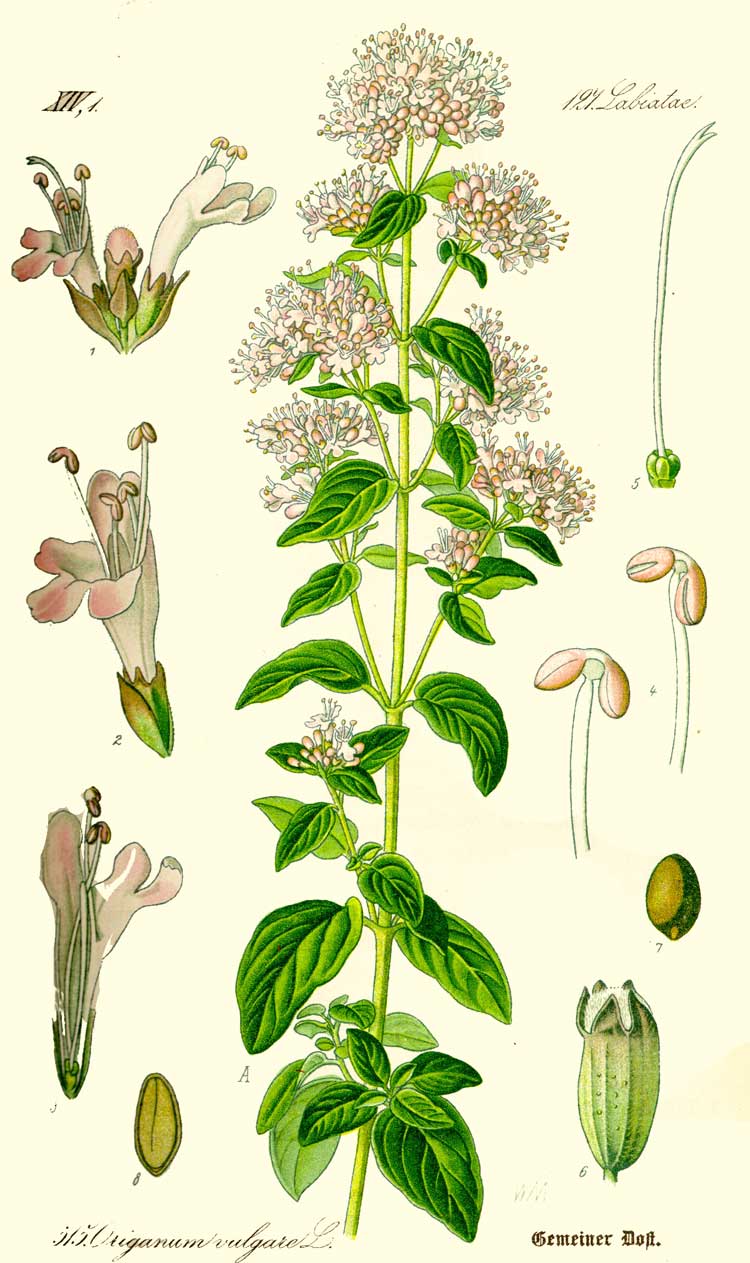
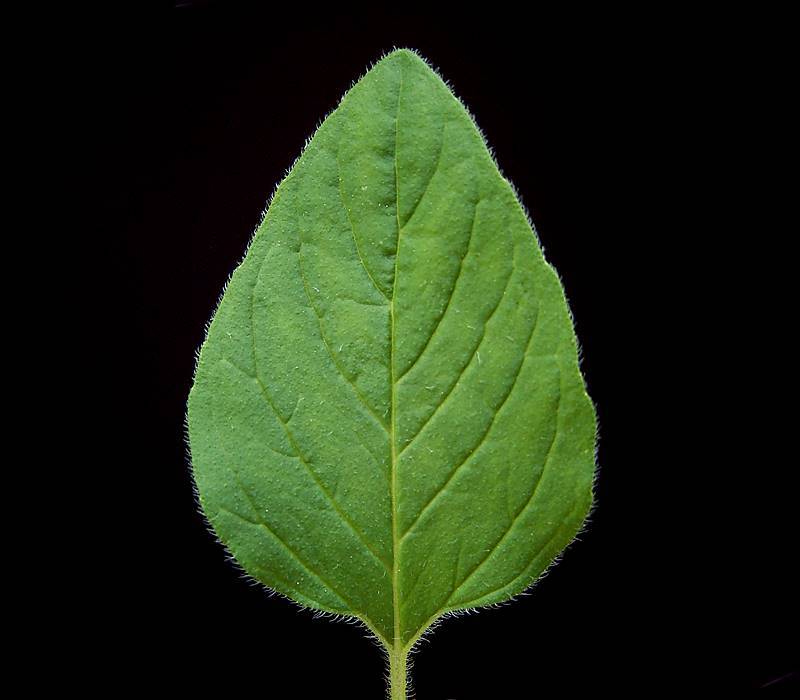
Oregano is a perennial herb from the mint family (Lamiaceae), native to the Mediterranean and western Asia, which can grow to a height of 20–80 cm. On the stem, the spade-shaped leaves (1–4 cm long) grow opposite and are generally covered with soft hairs (trichomes). Rose or lavender tinted flowers (3–4 mm) are found clustered on spikes produced at axillary or terminal buds.

This herb is sometimes called "wild marjoram," and sweet marjoram (O. majorana) is a different species closely related to oregano.

Chemistry and Medicinal Properties

Oregano is rich in antioxidants, mainly because it has high amounts of phenols and flavonoids. Some of the chemical components of oregano essential oil are: carvacrol, thymol, limonene, pinene, ocimene, and caryophyllene. Oregano essential oil has antifungal and antimicrobial properties, and it has been demonstrated in test tube studies to be effective against bacterial pathogens, such as E.coli, strains of Staphalococcus, and Listeria monocytogenes.

Here is a quote from one study of the terpenoid phenols found in oregano and their antifungal and anti-cancer properties (see the last link in "Links for More Information" to view the article in its entirety):

 Terpenoid phenols, including carvacrol, are components of oregano and other plant essential oils that exhibit potent antifungal activity against a wide range of pathogens, including Candida albicans, Staphylococcus aureus, and Pseudomonas aeruginosa. Terpenoid phenols have been shown to be efficacious not only on planktonic cells but also on biofilms of Candida albicans that are resistant to many antifungal drugs. Carvacrol demonstrated the strongest antifungal activity against Candida albicans biofilms, with a MIC of <0.03% (9). Furthermore, carvacrol was shown to be effective regardless of the maturity of the biofilm. The terpenoid phenols tested were able to inhibit biofilms of several strains of Candida, including C. albicans, C. glabrata, and C. parapsilosis. In addition to their antimycotic, antibacterial, insecticidal, and bioherbicidal properties, essential oils are also well known for their antioxidant characteristics and are used to inhibit lipid peroxidation in preventing food spoilage or as chemoprotective agents in the treatment of various diseases, including cancer (1, 26).
Culinary Uses

Oregano leaves are used extensively as an herb in Mediterranean cuisines, such as Italian and Greek. They have a slightly bitter, aromatic, "piney" or camphor-like taste, and their flavor tends to be more pronounced when they are dried.

Pictures

Flowers


Leaves

LINKS FOR MORE INFORMATION

Floridata

Missouri Botanical Garden

PLANTS Profile


Kew Royal Botanical Gardens

Mechanism of Antifungal Activity of Terpenoid Phenols Resembles Calcium Stress and Inhibition of the TOR Pathway 

Sunday, May 19, 2013

Coriander (Coriandrum sativum)


Scientific Name: Coriandrum sativum
Other Names: Coriander, Cilantro (Spanish for "coriander"), Chinese Parsley

Description 

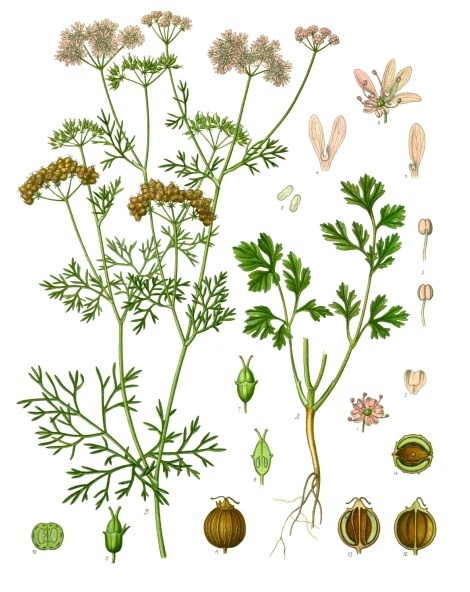
Coriander, also known as cilantro, is an edible annual herb of the carrot or parsley family (Apiaceae) native to regions in southern Europe, North Africa, and southwestern Asia.

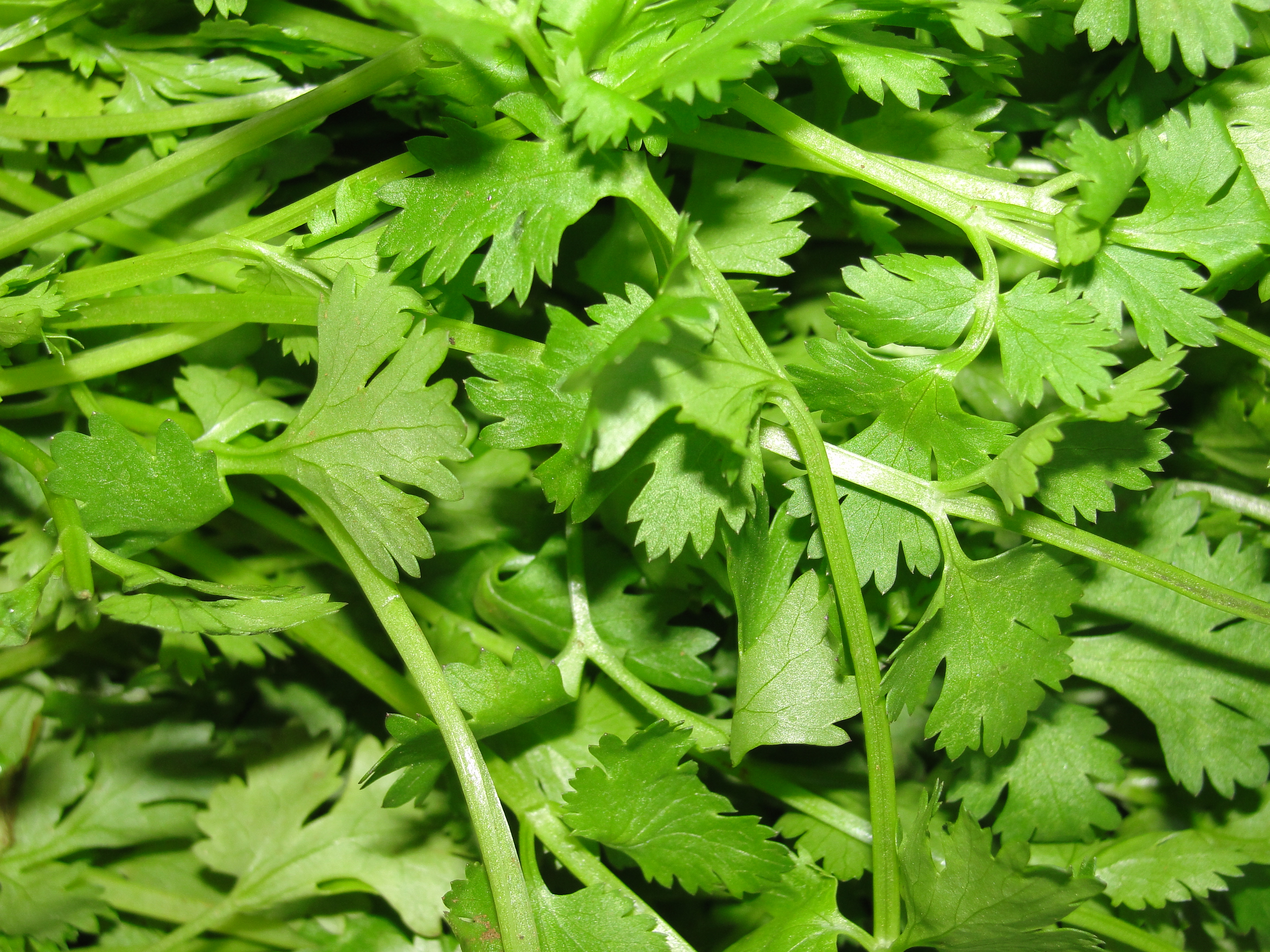
The leaves at the base of the plant are lobed, with jagged edges at the tips, and look somewhat like parsley leaves. Leaves on the flowering stems, which grow higher than those at the base, are thin and feathery or "fern-like." The flowers are white or pale pink and are asymmetrical, growing in an umbel formation with the petals that point away from the center of the umbel longer (5–6 mm) than those pointing towards it (1–3 mm). The coriander fruit, which is often referred to as its "seed" is a dry schizocarp 3–5 mm in diameter.

Culinary Uses

Some people find coriander to be pleasantly fragrant and tasty and others find that it tastes unpleasant, depending on that person's genetics. Those who dislike the taste of cilantro sometimes describe it as tasting soapy, moldy, or some other unappetizing descriptor, while those who like it describe the flavor as citrousy, fresh, and so on.

Coriander leaves are used in Mexican cuisine in guacamole, salsa, and as a garnish. In Southeast Asian cooking, they are used to flavor meats, soups, and salads. The mature fruits/seeds, which are dried and have a spicy-sweet taste, are used to flavor sausages, stews, cakes, and sweetbreads in European and Middle Eastern dishes. They are also used to disguise the taste of some medicines in order to make the medicines more palatable.

Medicinal Uses and Chemistry

Coriander essential oil has antifungal and antimicrobial properties. Its main chemical component is linalool (58.22%), second most common is geraniol (17.87%), and the third most common is neryl acetate (12.22%). In smaller amounts, it contains: n-decanal (2.53%), dodecanal (2.35%), camphor (2.15%), 2E-decanol (1.32%), borneol (1.19%), and 2E-dodecanol (0.95%).

Pictures

http://upload.wikimedia.org/wikipedia/commons/7/7c/Coriandrum_sativum_003.JPG

Coriander flowers


Coriander leaves


Coriander fruits / seeds


LINKS FOR MORE INFORMATION:

Floridata

Missouri Botanical Garden

PLANTS Profile

Prevalence of cilantro (Coriandrum sativum) disliking among different ethnocultural groups

[PDF] Antifungal Activity, Toxicity and Chemical Composition . . .