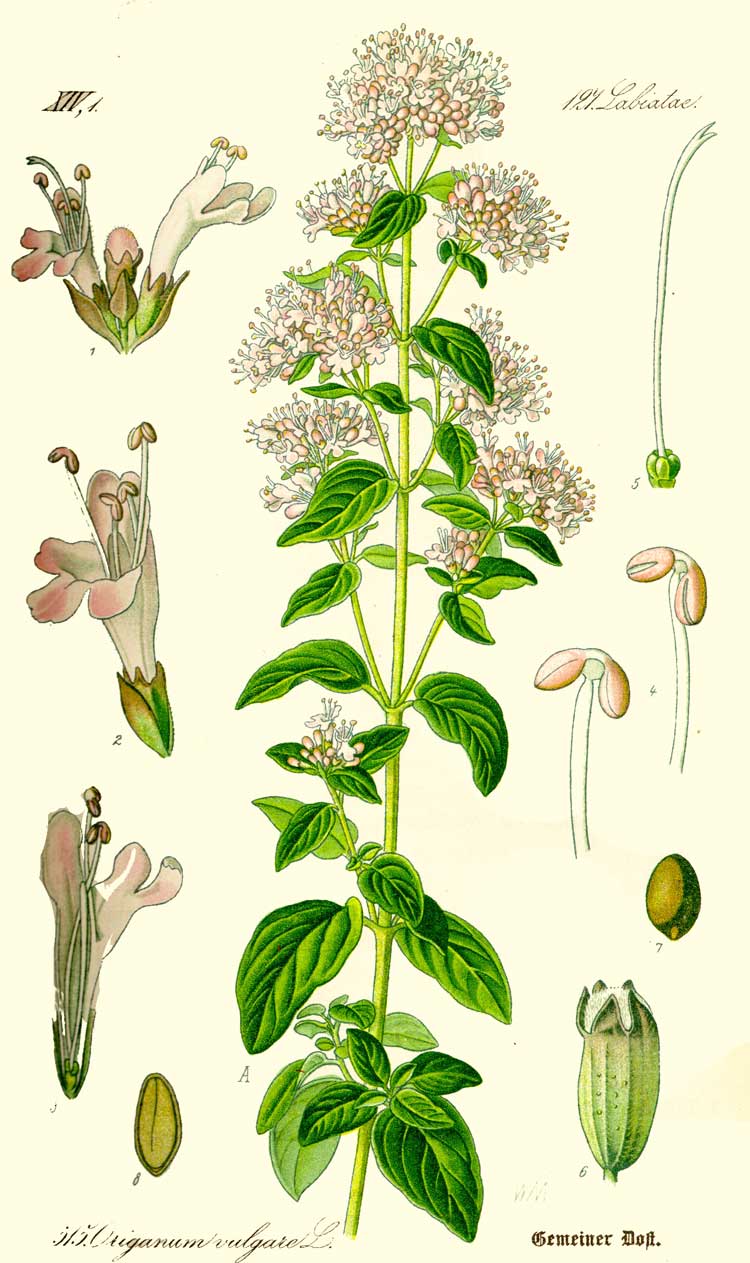
Scientific Name: Origanum vulgare
Other Names: Oregano, wild marjoram
Description
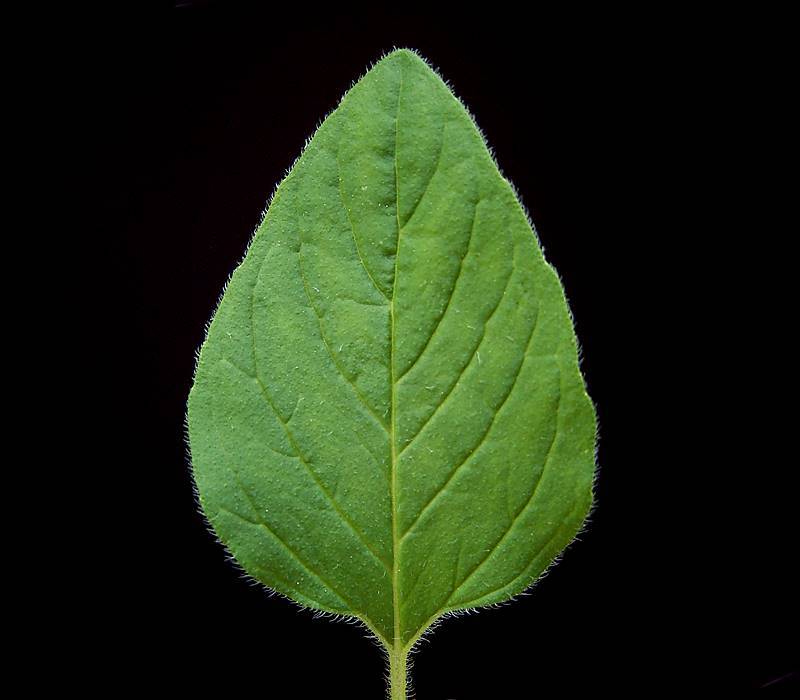
Oregano is a perennial herb from the mint family (Lamiaceae), native to the Mediterranean and western Asia, which can grow to a height of 20–80 cm. On the stem, the spade-shaped leaves (1–4 cm long) grow opposite and are generally covered with soft hairs (trichomes). Rose or lavender tinted flowers (3–4 mm) are found clustered on spikes produced at axillary or terminal buds.
This herb is sometimes called "wild marjoram," and sweet marjoram (O. majorana) is a different species closely related to oregano.
Chemistry and Medicinal Properties
Oregano is rich in antioxidants, mainly because it has high amounts of phenols and flavonoids. Some of the chemical components of oregano essential oil are: carvacrol, thymol, limonene, pinene, ocimene, and caryophyllene. Oregano essential oil has antifungal and antimicrobial properties, and it has been demonstrated in test tube studies to be effective against bacterial pathogens, such as E.coli, strains of Staphalococcus, and Listeria monocytogenes.Here is a quote from one study of the terpenoid phenols found in oregano and their antifungal and anti-cancer properties (see the last link in "Links for More Information" to view the article in its entirety):
Terpenoid phenols, including carvacrol, are components of oregano and other plant essential oils that exhibit potent antifungal activity against a wide range of pathogens, including Candida albicans, Staphylococcus aureus, and Pseudomonas aeruginosa. Terpenoid phenols have been shown to be efficacious not only on planktonic cells but also on biofilms of Candida albicans that are resistant to many antifungal drugs. Carvacrol demonstrated the strongest antifungal activity against Candida albicans biofilms, with a MIC of <0.03% (9). Furthermore, carvacrol was shown to be effective regardless of the maturity of the biofilm. The terpenoid phenols tested were able to inhibit biofilms of several strains of Candida, including C. albicans, C. glabrata, and C. parapsilosis. In addition to their antimycotic, antibacterial, insecticidal, and bioherbicidal properties, essential oils are also well known for their antioxidant characteristics and are used to inhibit lipid peroxidation in preventing food spoilage or as chemoprotective agents in the treatment of various diseases, including cancer (1, 26).
Culinary Uses
Oregano leaves are used extensively as an herb in Mediterranean cuisines, such as Italian and Greek. They have a slightly bitter, aromatic, "piney" or camphor-like taste, and their flavor tends to be more pronounced when they are dried.
Pictures


LINKS FOR MORE INFORMATION
Floridata
Missouri Botanical Garden
PLANTS Profile
Kew Royal Botanical Gardens
Mechanism of Antifungal Activity of Terpenoid Phenols Resembles Calcium Stress and Inhibition of the TOR Pathway
